
Well, not really, but in this day of ‘click-bait’ headlines, I thought I’d give it a try.
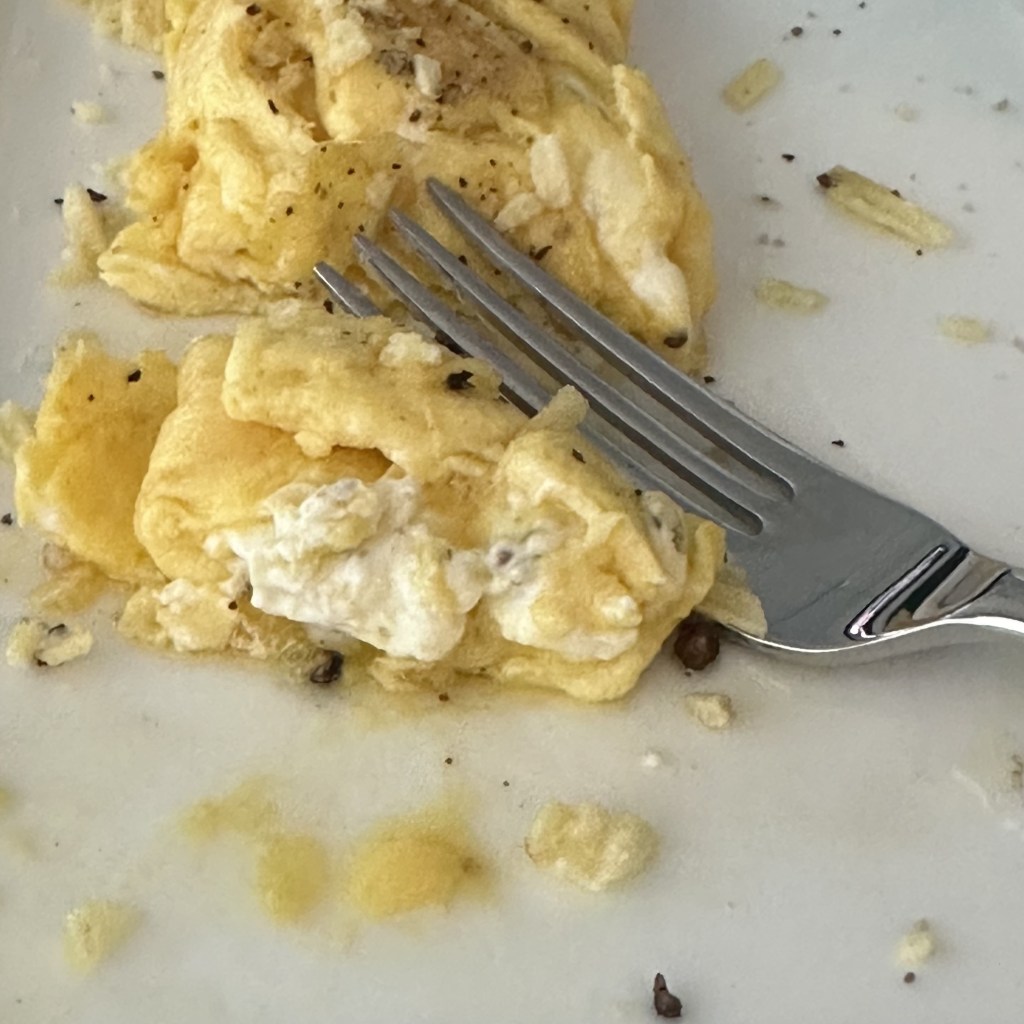
It’s an interesting commentary on pop culture, and the role food plays in it, that one of the most talked about scenes from the Hulu series “The Bear” is also one of the quieter, and more introspective ones. It’s impact is due almost entirely to the omelette that one character prepares for the other. It’s easy to imagine an omelette as comfort-food, but when it’s filled with Boursin cheese, then topped with crushed potato chips, well, it’s just so much more so.
Like so many others, I was both intrigued and challenged. I had to give it a try. And this is where the steel comes in.
When I first really got into cooking, I started with a set of All-Clad stainless. Cooking with stainless steel cookware, when not experienced in its use, has to be, along with cast iron, the primary reason non-stick cookware was invented. It seems everything sticks, and presents a real challenge in the clean-up department. Face it, there’s a reason dishwashing detergent ads almost all show used and dirty stainless steel pans to demonstrate their allegedly fantastic cleaning ability.
But what about non-stick? I have some non-stick cookware too, and it’s interesting that so many of the online tutorials on omelettes by known chefs suggest using a non-stick skillet. Non-stick has its place, and the newer hard-anodized and ceramic non-sticks are safe. Recently, however, I’d seen some snippets about the proper way to use stainless steel cookware so that foods do not stick.
Putting two and two together, what better way to tackle mastering non-stick cooking in stainless steel than to tackle, at the same time, “The Bear” omelette. Unfortunately, my local market was out of Boursin, but Boursin, which was created by a Frenchman of that name in 1957, is basically a cream cheese with a variety of flavors added, originally with garlic and herbs. For my trial, I set out 8 oz of cream cheese to soften (covered and overnight works), but before covering it added about a tablespoon of Mark Bitterman’s Herbs de Northwest, which also adds some salt.
Once the cheese is soft enough and workable, blend it all together and put it in a piping bag with about a 1/2″ tip (or a sandwich bag with a corner cut off).

Then, when you’ve prepared your pan and put the eggs in, let the eggs get to the point just before you roll them out, and pipe a couple of lines of the cheese to one side. Roll the edge of the eggs over the cheese, and you’re ready to finish rolling the omelette onto your plate.
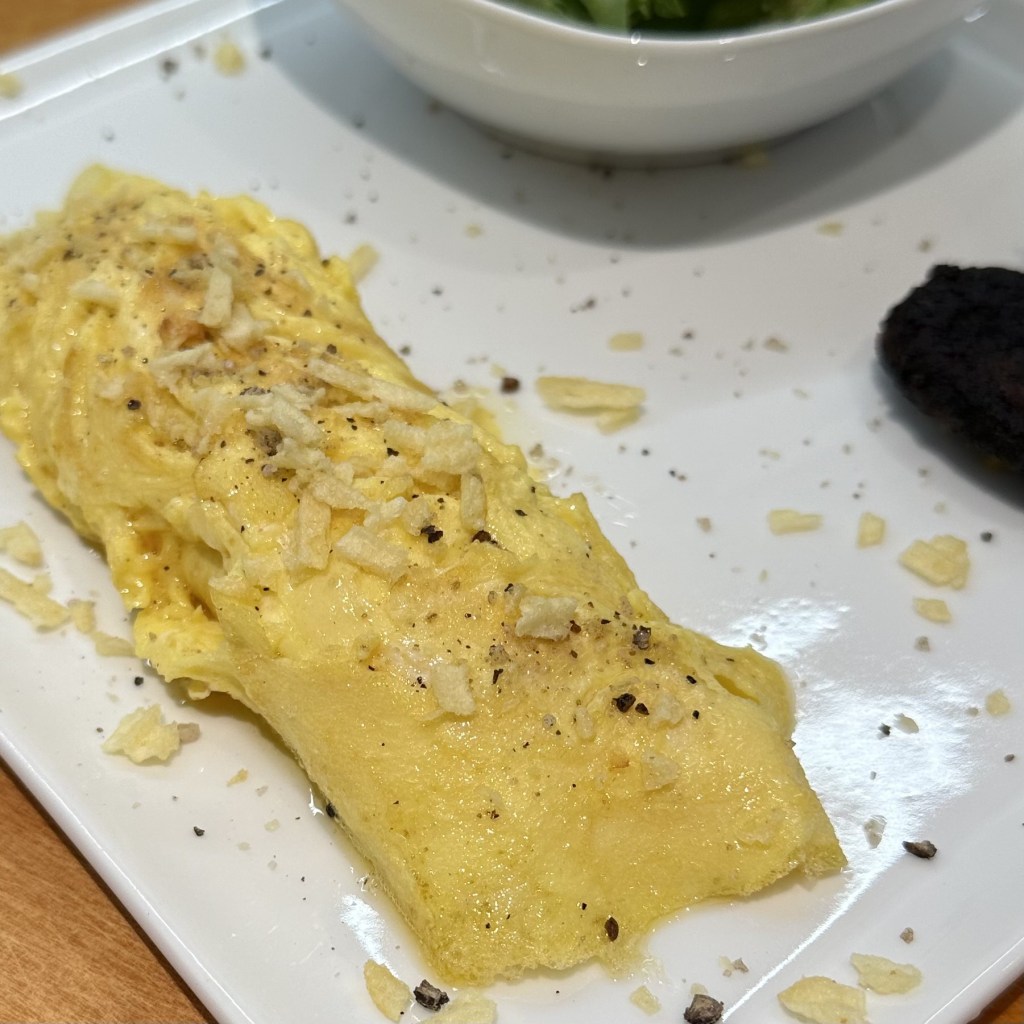
Add a little pepper (if you like), but most importantly, don’t forget the crushed potato chips! Ruffles work best, because they are thicker. Add some sausage and a small salad of mixed greens with a light vinaigrette and you’ve got it down pat.
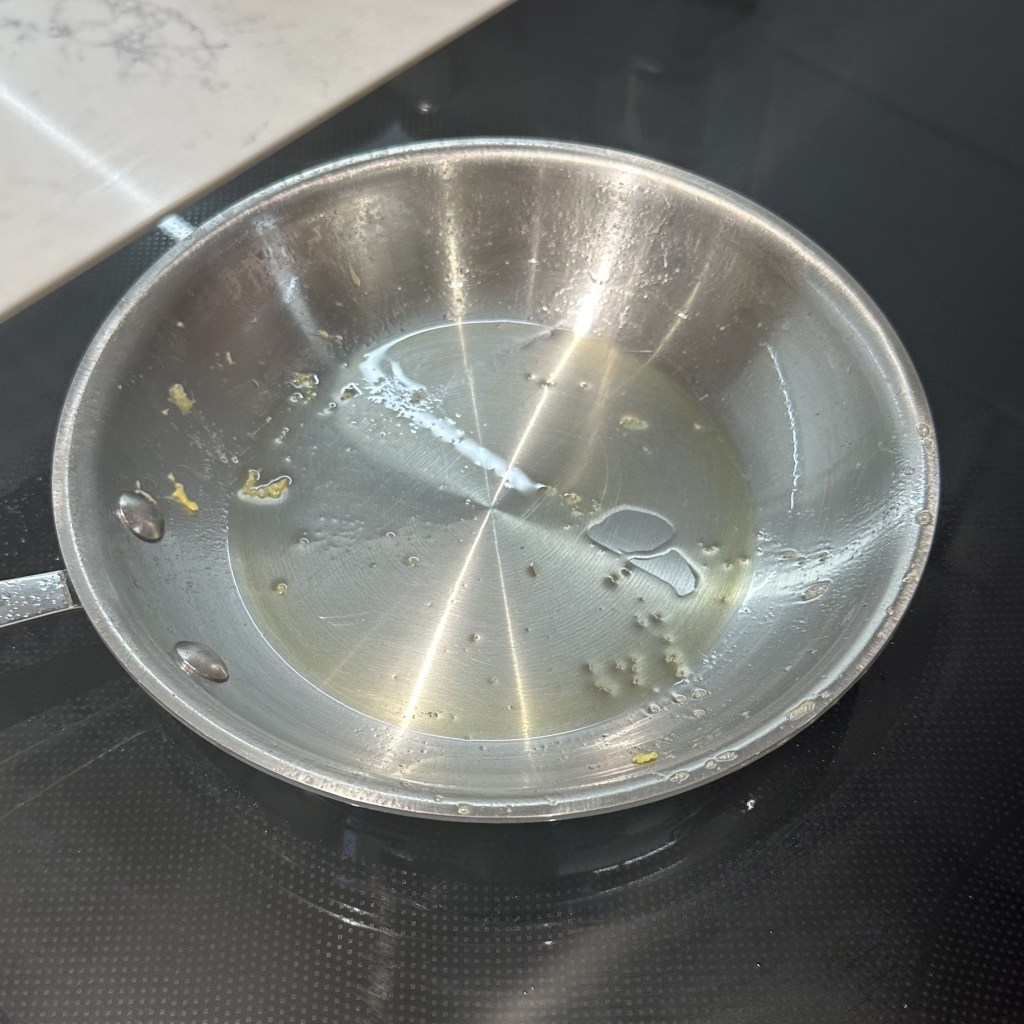
Oh, and in case you think I’ve let the food overshadow the other aspect of this adventure, here’s the skillet. That demonstrated technique/process really works. Try it – you’ll be happy you did.

 never 2 old 2 start cooking
Leave a reply to Frances Tims Cancel reply