
A friend and contemporary, whom I just happened to meet over breakfast several years back, graciously gave me a book entitled “1001 Foods to Die For”. One of the interesting characteristics of most entries is the history of that particular item. I like history, and it seems only natural, to me at least, to occasionally satisfy my curiosity by looking into the history of what I’m cooking.
With family coming to town, and with the opportunity to have a breakfast guest, I wanted to do something that would be quick, easy, and allow the most time for visiting before business called.
French Toast! But is it “French”?
French Toast has its roots in Roman times, when soaking stale bread in an egg/milk mixture, and then frying it, was a way to improve flavor and minimize waste. Honey, or a heavy syrup, over the top only further ensured palatability.
As we now know it, French Toast came on the scene in the early 1700’s, when an innkeeper in upstate New York, by the name of French, did as the Romans did, and soaked bread in a mixture of eggs and milk, fried it, and served it with syrup, or maybe something else. Hence the name (which was originally French’s Toast, but someone forgot the apostrophe s, and here we are – see, no auto-correct).
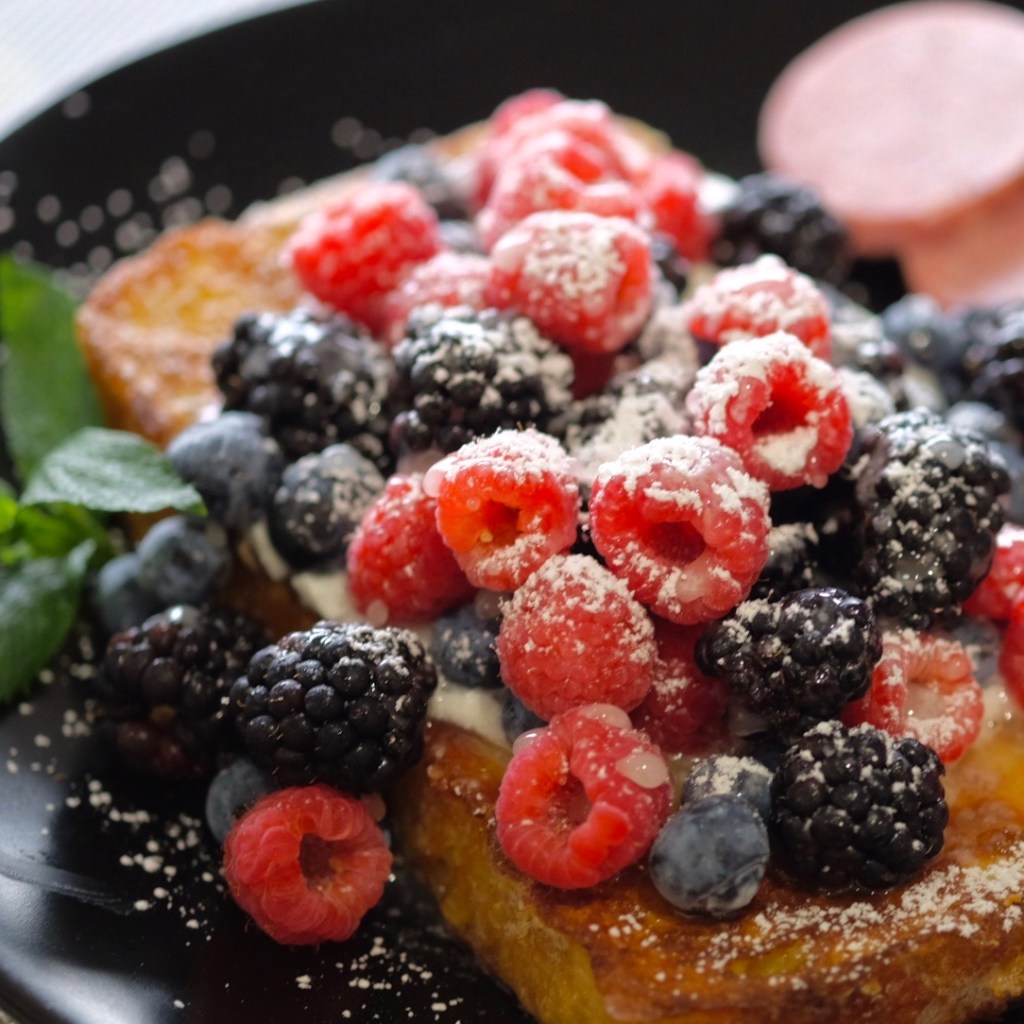
Have you ever been dining out, and while debating your order seen something being served to someone else, something that looks so good that your indecision flies out the window? Years ago, while enjoying breakfast with a business associate at The Mayflower Hotel in Washington, D.C., someone at the next table had ordered French Toast. Just two pieces of bread dipped in egg and milk and fried and topped with syrup, it was not! Much as pictured above, the toast was covered in fresh fruit, drizzled with a lemony glaze, then only lightly dusted with powdered sugar. I couldn’t resist, and that has been my French Toast preparation go-to ever since.
Let’s explore the simplicity of this magnificent dish.
Start by combining your eggs with milk, or half-n-half, or heavy cream. Then, for the sake of ease, pour the mixture into a rimmed baking sheet (a quarter sheet pan works nicely). This will make it much easier than using a bowl to get the bread quickly and evenly coated on both sides. A lot of recipes for French Toast call for cinnamon and perhaps other spices in the egg mixture. My preference is to keep it simple – eggs and milk. You can dust with cinnamon before serving, if that’s what you like.
Let the bread soak for a few minutes – both sides – as you want the mixture to penetrate the slice, not just kiss the outside of it. Remember, this started out as a way to revivify stale bread. (See NOTES)
Then, in a pan (preferably non-stick) heated to medium-high, place the slices, allowing them to brown on first one side, then the other, 3-4 minutes per side, depending on the heat and how dark you like it. If you’ve added spices to the mixture before cooking, that will tend to make the coating appear darker, so adjust accordingly.
Once done, remove the bread to a serving platter (if preparing for a serve-yourself situation), or plate for individual servings.
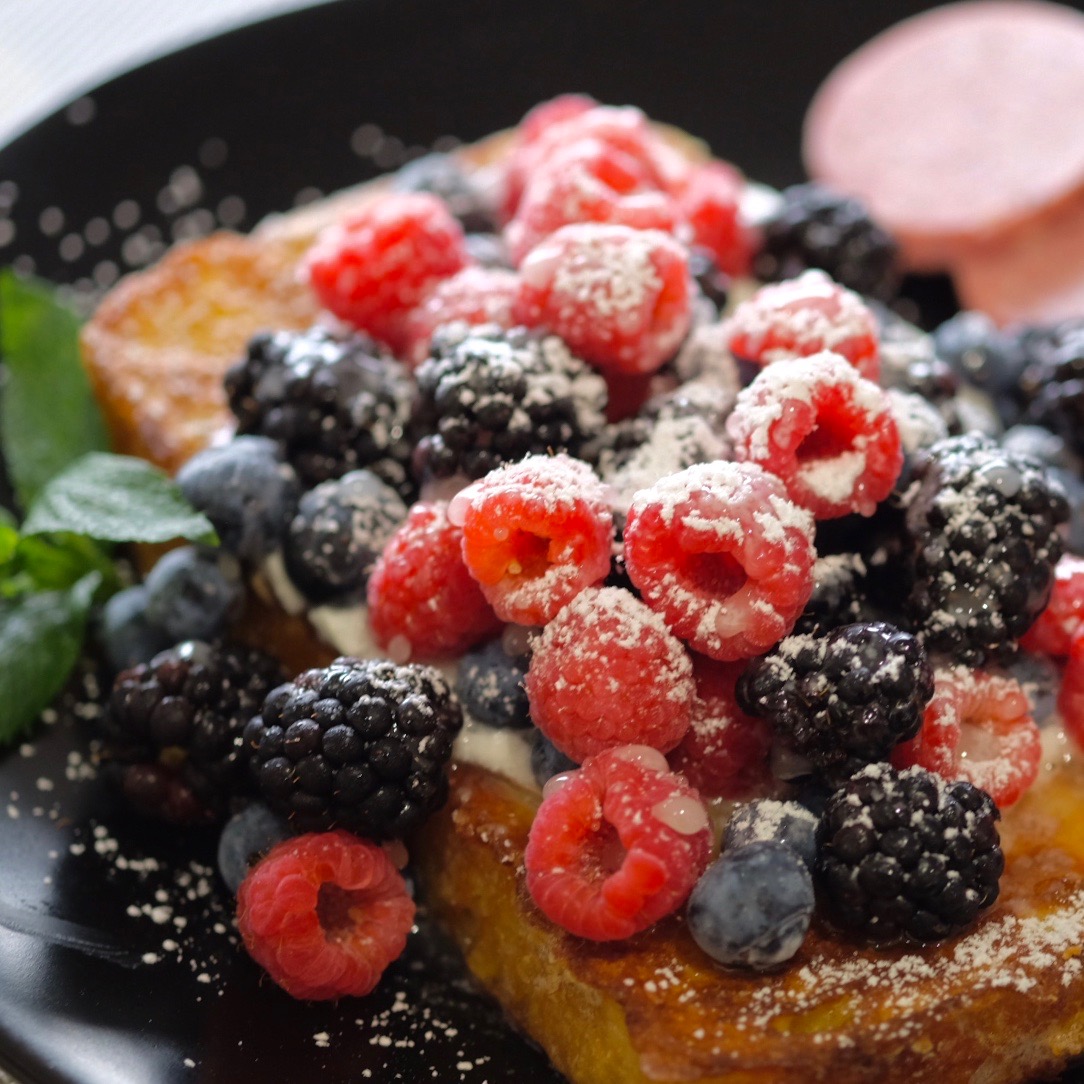
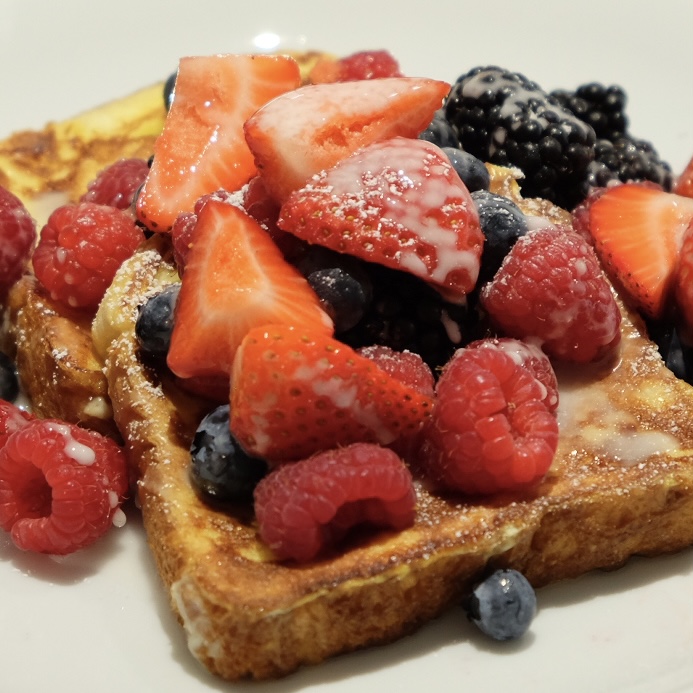
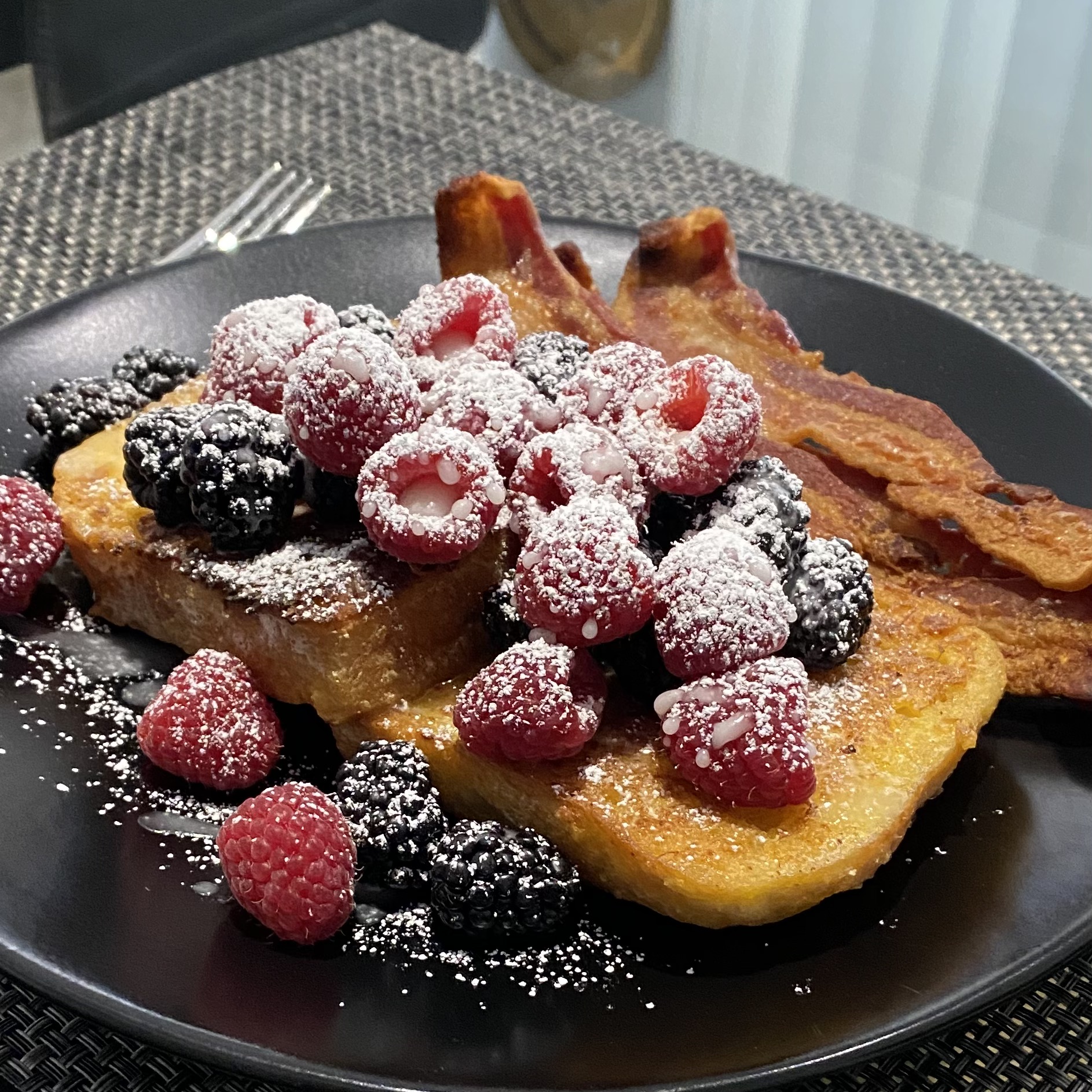
Fresh berries get my vote! Raspberries, blackberries, blueberries, strawberries – one or all, it’s all good. And as much as you like. A lemon glaze adds some brightness, and it’s easy. The glaze is just a blend of powdered sugar and fresh lemon juice. Start with a quantily of powdered sugar in a bowl, then slowly, while stirring, drizzle in the lemon juice to get the consistency you want. Pour it over the berries, then dust sparingly with powdered sugar, more for appearance than taste. I’ve also used whipped cream, which is a delectable alternative. A couple of sprigs of mint provide some color contrast.
If you like the idea of cinnamon, try cooking some apple slices in butter, brown sugar, and cinnamon, and using that for your topping. You’ll get a decidedly more autumnal look and taste. Of course, a topping of vanilla ice cream makes it totally brunch worthy. Fruit, grain, and dairy. The USDA should love it!!!
You can’t go wrong with a side of bacon or sausage. That will give you the tempering benefit of their saltiness.
ENJOY!!!

NOTES
About the bread. I had intended to bake and use Japanese Milk Bread, but time didn’t permit. It’s pillowy crumb makes it ideal. Peasant Bread works, too, but with a crumb not quite as soft as the milk bread, you’ll want to compensate by soaking it a little longer. Store-bought loaf bread works, but I’d opt for “Texas Toast” thickness, if available. And going back to the roots of this dish, you can use that ‘it’s getting hard’ baguette, just being sure to allow it to soak long enough to bring the bread back to life.


 never 2 old 2 start cooking
Leave a reply to Lamar Cancel reply