
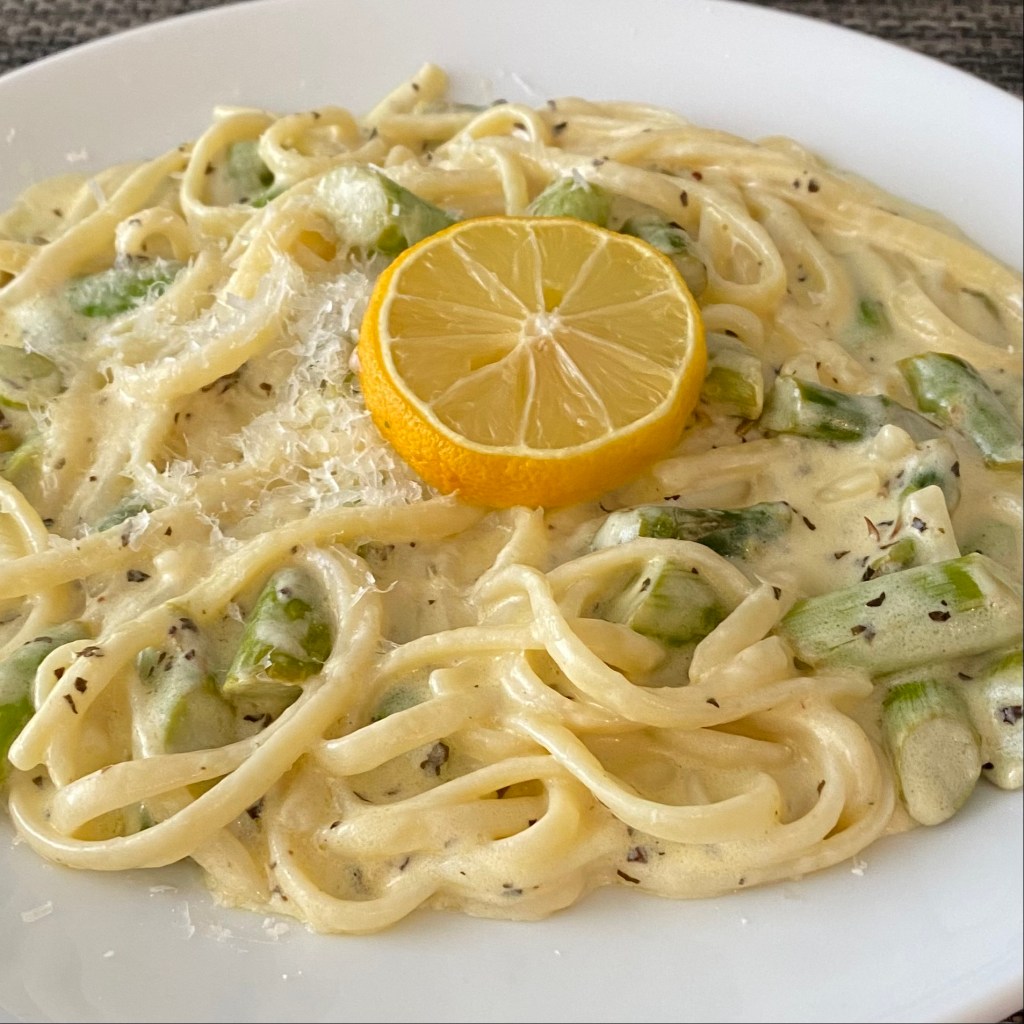
For several years ‘in retirement’, I worked part time at Sur la Table. Management knew I had a passion for cooking, and also knew I had a passion for learning. Even so, with chefs on staff, I was a bit surprised when they asked me to demonstrate pasta, from scratch to plate, Little did I realize that I would find myself so enraptured with a new area/phase of cooking. I’d always heard that homemade pasta tasted better, and had also heard that it was time-consuming and messy. No one ever told me how much absolute fun it is to make (more so to eat), and how simple it really is. Yes, it does take some time, and if you’re not organized it can be messy, but it’s time so well spent, and the clean-up is really quite easy. With the tactile sensations of the process, and the therapeutic value of it all, I was then, and still am hooked, and hope you will join me and cultivate a new addiction.
EQUIPMENT
You’ll want to get a few things before you get started with pasta. First of all, unless you have rolling pin and knife skills that far exceed those of most people, yours truly included, you will want to invest in a pasta machine. They really aren’t that expensive – somewhere around $125 tops. I opted for the Atlas Marcato Pasta Machine. It comes in two sizes – 150mm and 180mm – and comes with two attachments, one for spaghetti, and one for linguine. I opted for the 180mm. The slightly wider rollers give you an edge if/when you want to branch out into ravioli and lasagna. It is sleek, easy to use, easy to clean (no soap or water, just a brush), and simple to operate. With it you can roll the pasta to the desired thickness, and then cut it. If you so desire, after getting into pasta, it has additional attachments for different pastas. It does clamp onto the edge of a counter, and works more easily if you have that capability. If not, an overhanging large cutting board works as well, or just use it on a flat surface.
NOTE: If you have a stand mixer that takes attachments, explore the availability of a pasta attachmen; for beginners, you’re looking for one that rolls and cuts, not one for extruded pasta (rotini, etc). I have a Kitchen Aid stand mixer, and their pasta attachment works quite well. Too, with the mixer doing the work of rolling, being able to handle the dough with both hands is nice. HOWEVER, for beginners, there’s a real comfort in cranking with one hand and feeding the dough with the other; you can stop quickly if you sense something is going wrong.
Next, I got me what’s billed as a sugar shaker, but surmised that it would work as a flour duster when a dusting of flour is called for on your work counter or in the pasta-making process. Also, you’ll want to have a bench scraper. It will come in very handy throughout the process. Last, get a large pastry brush, one with bristles and not one of the silicone ones, as it will come in very handy for cleaning the pasta machine (which you never want to put in water).
That’s it! Once you have the basic equipment, you’re set to roll up your sleeves and have some fun.
PHASE I – the dough
Pasta is, in it’s simplest form, a mixture of egg and flour, with a little water thrown in, if necessary (some recipes call for a pinch of salt and a drizzle of olive oil, but those aren’t necessary, though they’re not harmful). A rule of thumb I’ve found helpful is to start with 100g (approx. 1 cup) of flour and 1 egg per serving.
Let’s start with the flour.
Purists prefer to use what’s referred to as “00” flour. “00” is not a type of flour; it refers to the grind. If your local market doesn’t carry it you can get it on Amazon.com. My personal preference is Caputo. It’s milled in Italy from Italian wheat; while it adds a real touch of authenticity to your pasta, it also has the benefit of being, in many instances, tolerated by those with a gluten intolerance (but not celiac). If you’re anxious to get started and can’t get your hands on (or in) “00” flour, most recipes will tell you that an all-purpose flour will work, though some recipes call for a half ‘n half blend of all-purpose flour and semolina.
Semolina, you’ll discover, is somewhat grainy in texture compared to traditional all-purpose or “00” flour, and is often recommended as the medium for dusting your countertop or cutting board for kneading and shaping your dough. I used regular all-purpose flour and semolina my first couple of times, and was pleased; I was equally pleased when using “00” flour the first time trying it.
Semola (also called Semolina flour) is Semolina that is ground to the consistency of all-purpose, or maybe even “00” flour. I was introduced to Semola by Mateo Zielonka, who I follow on Instagram. Mateo is a continuing inspiration to the world of pasta lovers, and you’d do well to follow him.
Next, the eggs.
As in most cooking, start with your eggs at room temperature. Some who make their own pasta use only egg yolks, but I’d suggest starting with whole eggs.
Now, let’s make pasta!
Put the flour on your work surface or in a large bowl and make a well in the middle. Put the eggs in the well and using a fork, beat the eggs until almost fully blended, then start pulling the flour in and work outwards until all is mixed thoroughly. You can use your hands for all of this, with the benefit of finding that as the dough gets to where it needs to be, it will no longer be sticking to your hands, and hour hands will appear totally devoid of dough.
Turn the dough out onto a floured surface and knead it with your hands until completely smooth, elastic, and not sticky. If too dry, add some water (I just wet my hands, shake them off, then go right back to it – that way I’m not overwatering the dough). If too wet, add some flour (this is where the shaker comes in handy). Kneading time is somewhere between 5 and 10 minutes, and don’t be timid, as the dough is not fragile. The dough should be smooth, uniform in color, and not sticking to your hands or the lightly floured work surface.
Confused or overwhelmed? Not to bother. Here’s how it’s done by Mateo, The Pasta Man.
Once the dough is ready, gather it into a ball, flatten it a little if you want, and either wrap it with plastic wrap or put it under an inverted bowl and allow the dough to rest and hydrate at room temperature for about 30 minutes – you can go up to an hour if you want.
HINT: Take advantage of this resting period and clean up from the first phase of the process. You might even have time for a cup of coffee or glass of tea if you want a short break. Skip the wine until later. Set up your pasta machine.
PHASE II – the fun part – rolling and cutting
Now the really fun part, designed to get you through the basic process of making pot-ready pasta, and in no way pretending to tell you all there is to know, or what’s involved, in the making of ‘specialty’ (spinach, etc.) or three-dimensional pastas (rotini, and the like, which may actually be extruded).
Unwrap or uncover the dough and using the bench scraper cut it into three or four pieces. Keep one piece out and wrap or cover the balance. Flatten the piece you’re working with and shape it into a rough rectangle, with the longer side approximately the width of your rollers. With the rollers on the pasta machine set to their widest, roll the dough through, catching it on the underside. The dough should not stick to the rollers. If it appears sticky, sprinkle a little flour and you’ll be on your way. (The back of your hand is recommended for catching the dough; or you can let it “S” fold just as it comes out. Using the back of your hand is a good habit to get into as it avoids finger indentions as you get your pasta to the optimum thinness.) Fold the dough into thirds and repeat the process on the widest setting. You’ll want to do this 5-6 times, and may want to dust the dough a little between passes through the rollers to keep the dough from sticking. Before the last pass, fold the dough so that the resulting shape is relatively long and narrow and fits easily between the edges of the pasta machine. NOW, pass the dough through the rollers without folding, adjusting the rollers to the next narrower setting between passes until the desired thickness is reached. Your pasta machine will tell you what thinness is ideal for what type of pasta. Something on the thin side of 1/16″ is most common. You may find it convenient to lightly dust the flour between passes. What you should notice is how stretchy the dough is. If it’s starting to split, crack, or otherwise fall apart, add a bit of water and start the process over, after a few more minutes of covered rest.
Pasta dough is extremely forgiving, and the see-saw-ing back and forth between more moisture and more flour, until you get ‘the feel of it’, is part of the process. You’ll develop your own proportions and feel for it as you go along.
After the last pass you’ll have an extremely elastic piece of dough that is most likely a long, narrow oval. It’s the basis for whatever pasta dish you’re making. Leave it as is and cut it in uniform rectangles for lasagna or for ravioli; run it through the cutting part of the pasta maker for fettuccini or capellini or spaghetti. The beauty is that you get to decide, and don’t hesitate to play around with it. Just remember that thinner is better, particularly if you’re making ravioli or a pasta that otherwise doubles it up (torttolini, for instance).
For fettuccini or other cut forms, toss the resulting pieces in a little flour and either dry them on a rack or, as many do, form them into nests.
Phase III – the moment of truth
When ready to cook, put the pasta in a large pot of boiling, salted water, maybe with a little olive oil in the water, and boil until ‘al dente’. The literature will tell you that fresh, homemade pasta takes less time to cook than dried pasta, and that’s true, but if you’re not cooking it right away you’ll want to opt for a longer cook time.
BUONO APPETITO!!!
TIPS:
If you’re one of those who likes to see it being done, I’ve linked a video for you. In the manner of many chefs, this guy makes his pasta by putting the flour on the cutting board and putting the eggs in a well. I strongly suggest you use a bowl the first time – if you use this traditional method, and the dike breaks, you’ll curse me, and most likely not feel compelled to make pasta for a while. However, you’ll get a feeling of the process from beginning to end, hopefully seeing and realizing that it’s not really complicated. If you liked Play-Doh as a child, you’ll love making pasta!!!
In discussing cooking time with one of the great chefs at Sur la Table, I commented that in the pasta class he had just finished he did not appear to be cooking the pasta long at all. His rule of thumb for pasta going straight from machine to pot to sauce is to lightly toss the pasta with some flour after the cutting, put it straight into the water, and cook for about 2 minutes. He then puts it in the sauce and lets it finish cooking, but for no longer than another 2-3 munutes in the sauce. In addition, worry not that there is still some of the water from the pot clinging to the pasta; it will help it become close friends with the sauce.
When working the pasta, and you find your shaping or cutting of the dough leaves you with scraps, you can recombine the scraps, adding a little flour or water as necessary to get the consistency right, let them rest a bit, and put them right back into the process. I’ve read that you can refrigerate pasta dough for later use. I’ve also read that it might take on a grayish caste when kept for a length of time. I can tell you from experience that the color difference is there, but further assure you that it does not affect the look or taste of the finished product.
 never 2 old 2 start cooking